
Key Takeaways
- If your tooth hurts when you bite down, the cause may be a cavity, crack, inflamed nerve, gum problem, or uneven bite pressure.
- Sharp pain when releasing a bite can be a sign of a cracked tooth, although symptoms vary.
- Tooth pain triggered by sweets, lingering sensitivity, or throbbing may indicate different underlying problems.
- Persistent or worsening pain needs a dental assessment rather than repeated attempts to manage it at home.
- Miller Dentistry can evaluate the cause and recommend treatment based on the condition of the affected tooth.
Biting into a sandwich shouldn’t make you wince. Yet when teeth hurt when you bite, even familiar foods can become uncomfortable. Sometimes the pain is a brief twinge. In other cases, chewing causes sharp discomfort that lingers after you stop eating.
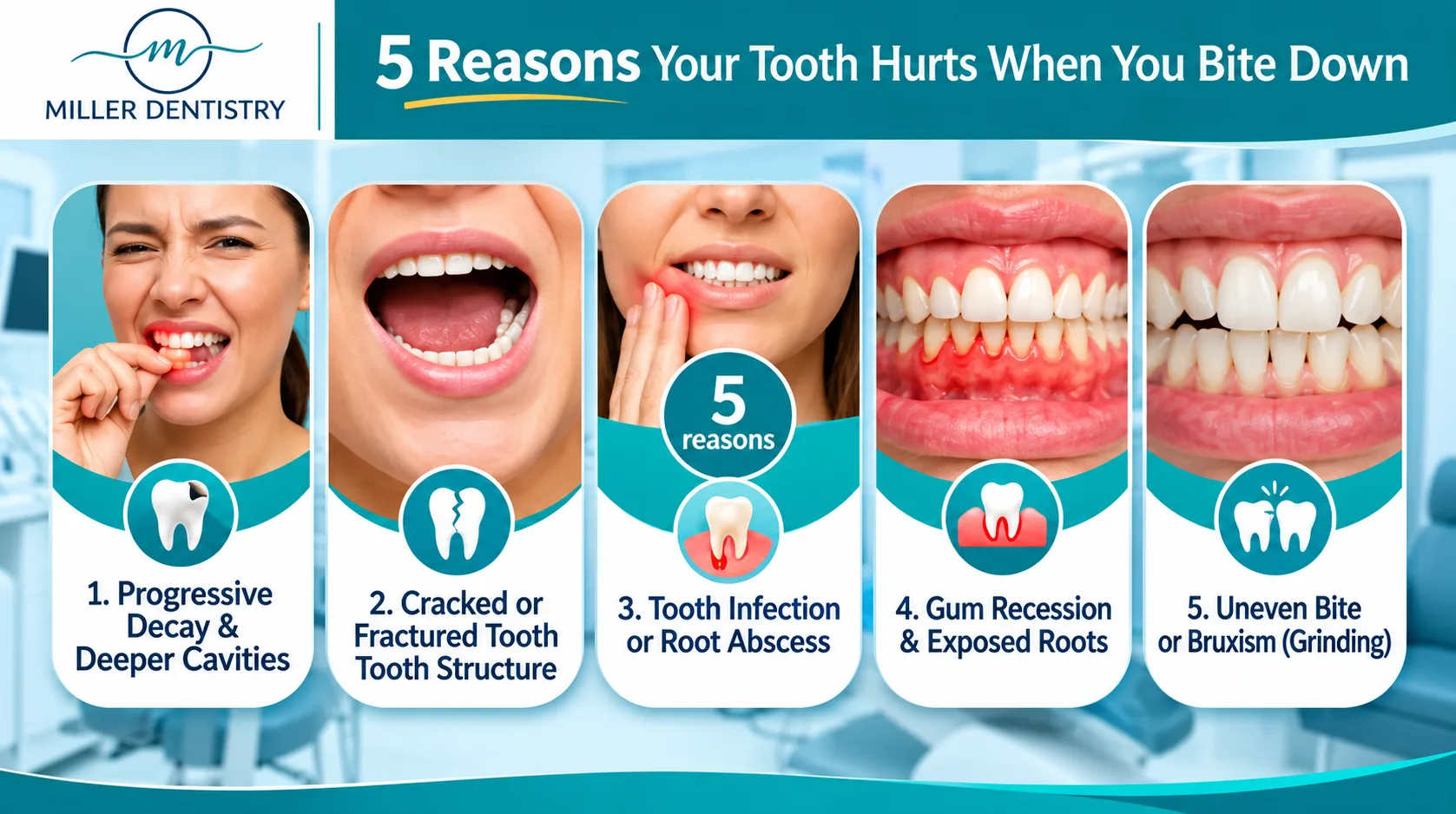
So, why does my tooth hurt when I bite down? The answer depends on what’s happening beneath the surface. Here are five possible causes and the clues that may help you recognise when it’s time to see a dentist.
1. A Cavity Has Reached Deeper Tooth Layers
Early cavities don’t always hurt. As decay progresses into the dentin, however, pressure and temperature changes can irritate the tooth. You might notice that your tooth hurts when eating sweets, or that cold drinks trigger sensitivity alongside discomfort when chewing.
A small cavity may be treatable with a filling. Deeper decay can require more extensive treatment, particularly if the pulp becomes inflamed. Don’t wait for constant pain before arranging an examination.
2. A Cracked Tooth Is Taking Pressure
One of the more easily overlooked causes of bite-related pain is a crack. Cracked tooth symptoms can include sharp discomfort when chewing, sensitivity to hot or cold, and pain that comes and goes.
A crack may be difficult to see at home. You might notice that your back tooth hurts with pressure, particularly when eating something firm, without being able to identify the exact source.
Avoid chewing hard foods on the affected side until you can get it checked. A dentist can assess the tooth and determine whether it needs a restoration or another treatment.
3. The Tooth’s Nerve Is Inflamed or Infected
When decay, a crack, or an injury affects the pulp—the soft tissue containing nerves and blood vessels—pain can become more persistent. You may experience tooth throbbing and pain when biting down, lingering sensitivity, or discomfort that interrupts sleep.
An infection around the root can also cause tenderness when pressure is applied. Swelling, a bad taste, pus, or fever may indicate a more serious problem.
Severe or excruciating tooth pain warrants prompt dental attention. Facial or neck swelling that affects breathing or swallowing requires emergency medical care.
4. Gum Disease Is Affecting the Tooth’s Support
Teeth rely on healthy gums and supporting bone to remain stable. When periodontal disease damages these structures, chewing can become uncomfortable, particularly in more advanced cases.
You may also notice bleeding gums, persistent bad breath, gum recession, or teeth that feel loose. Back teeth pain when chewing isn’t always caused by the tooth itself; the surrounding tissues may also be involved.
Treatment depends on the severity of the gum problem. A dental examination can help determine whether professional cleaning, periodontal treatment, or another approach is appropriate.
5. Grinding or an Uneven Bite Is Overloading the Tooth
Clenching and grinding can put continuous strain on the teeth. As a result, over time this leads to wear, cracks, and pain in the process of chewing. A filling or crown that is too high may lead to one tooth getting more impact than the others.
If your tooth hurts to touch or feels especially tender when your teeth meet, mention whether you’ve recently had dental work or wake up with jaw soreness.
A dentist can check your bite, restorations, and signs of grinding before recommending an adjustment or protective night guard.
What Should You Do When Biting Hurts?
Try to avoid eating hard foods and try chewing on the opposite side of the mouth at least until it does not bother you. Avoid continuing to press down on the painful tooth and never put aspirin against the gum. For immediate relief, ask a pharmacy or a doctor for suggestions for pain relief. The American Dental Association’s guidance on acute dental pain explains available options and their risks.
Miller Dentistry can assess persistent bite-related pain and help identify the appropriate treatment. Early evaluation may prevent a manageable problem from progressing.
Frequently Asked Questions:
Q. How do you fix a tooth that hurts when biting down?
Ans: Treatment depends on the cause. A cavity may need a filling, a cracked tooth may require a crown or other restoration, and an infected tooth may need root canal treatment. An uneven filling may only need adjustment.
Q. How to tell if it’s tooth pain or infection?
Ans: Pain alone cannot confirm an infection. Persistent throbbing, swelling, fever, pus, or a bad taste can raise concern, but an examination is needed to establish the cause. Seek prompt care if these symptoms occur.
Q. Do I have a cavity if my tooth hurts when I bite down?
Ans: Not necessarily. Cavities are one possible cause, but cracks, pulp inflammation, gum disease, grinding, and bite problems can produce similar symptoms. A dentist may need an examination and X-rays to identify the issue.
Q. What stops tooth pain immediately?
Ans: There is no guaranteed instant fix because relief depends on the cause. Avoid chewing on the affected tooth and consider appropriate over-the-counter pain relief if safe for you. Arrange dental care rather than relying on temporary relief to resolve the underlying problem.